Designing at the vanguard
CuteCircuit’s fantastical works bridge fashion, engineering, AI, and the future
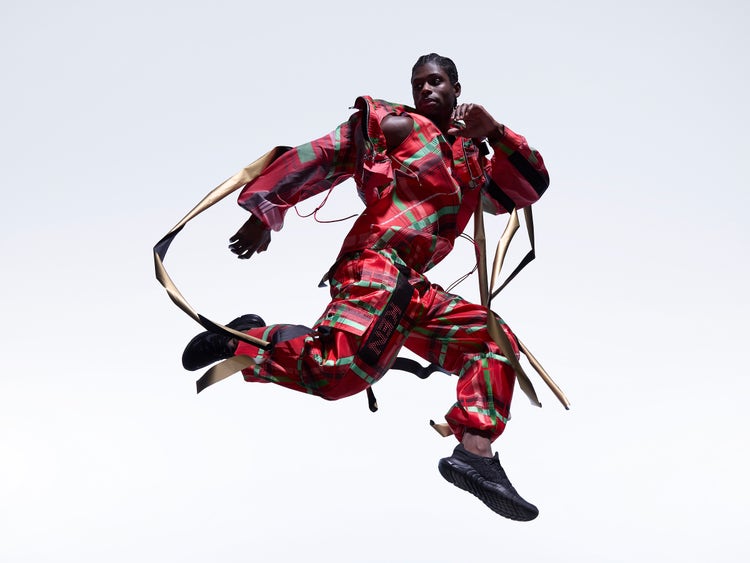
When fashion is increasingly shaped by data, interfaces, and machine intelligence, the question is no longer whether clothing can be “smart,” but what kind of intelligence do we want it to actually embody? For more than two decades, London-based studio CuteCircuit has been answering that prompt at the cutting edge of design.
Founded in 2004 by Francesca Rosella and Ryan Genz, CuteCircuit occupies a unique position somewhere between couture house, research lab, and speculative design studio. Their garments integrate smart textiles with microelectronics, and blend interaction design in ways that treat technology not as an add-on, but as an extension of the body itself.
Clothing as a medium for connection
Projects like the HugShirt—which transmits the sensation of touch across distance—and the SoundShirt—which translates music into a haptic experience—reframe clothing as a medium for connection rather than display. And this philosophy has increasingly shaped their collaborations. When Italian pop icon Laura Pausini performed in luminous CuteCircuit designs during her Inedito World Tour, the garments became more than costumes; they functioned as part of the performance, transforming sound into something tactile and immersive. For all the naysayers, there was no doubt that what once felt experimental has now quietly moved onto the world’s largest stages.
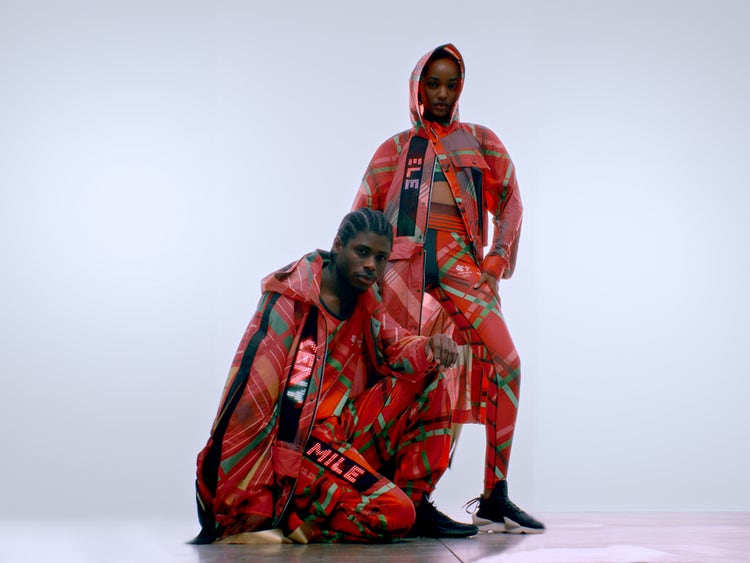
Despite this growing visibility, misconceptions about wearables persist. Many still imagine rigid electronics or exposed circuitry. Rosella points to this as a fundamental misunderstanding: “The worst misconception is that people think there are going to be wires inside the garments… that they might be dangerous or uncomfortable.”
After years of experimentation, the studio has developed radical proprietary techniques for embedding intelligence directly into textiles. The result is clothing that stays soft, flexible, and washable. In essence, garments that behave like fashion first, tech second.
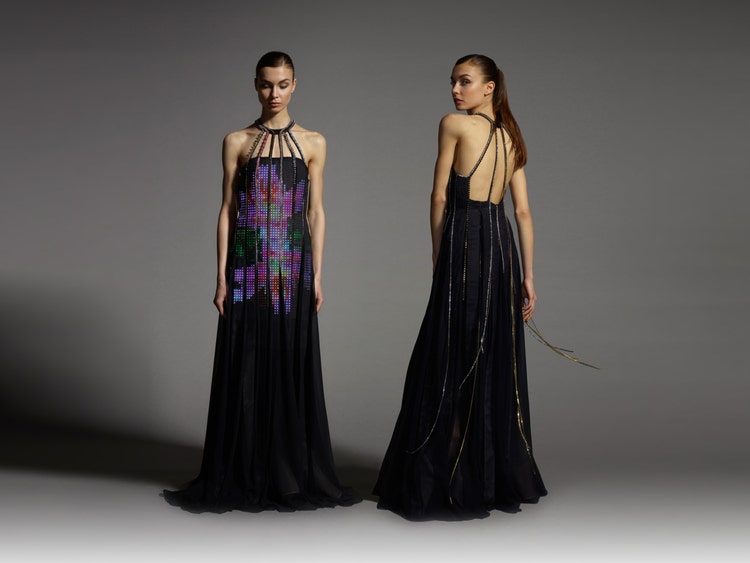
CuteCircuit treats the fabric itself as the computational medium, with fashion becoming the interface, creating garments that look and feel like couture while functioning as responsive systems. As Rosella puts it, “We are designers. It has to look good inside and outside.”
The necessity of human expertise in the creative territory of AI
Today, generative AI is introducing new and unconventional dimensions to the design process. For Rosella, these tools aren’t replacements for creativity, but extensions of it. She often begins with speculative sketches generated through AI software, then refines them in Adobe Illustrator to produce files for digital textile printing. What emerges is a fluid workflow in which imagination moves quickly into fabrication: An image becomes a printed textile, then a finished garment.
Yet this process does not always simplify production. If anything, it can introduce new complexities. As AI expands the range of possible forms, it often generates designs that are difficult to realize physically. “Sometimes it makes things more complex,” Rosella notes. “You create something incredible, and then the client asks if you can make it—and you realize you’ve just made your life harder.”
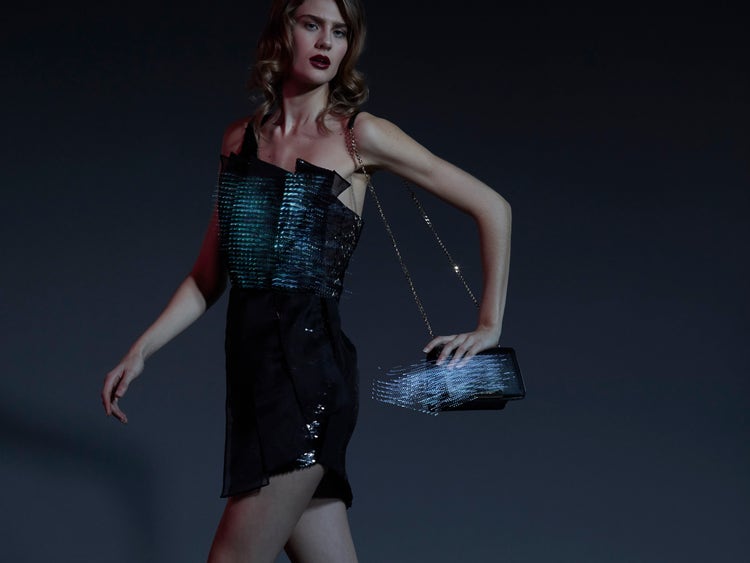
This tension reflects a broader truth that while AI can open new creative territory, human expertise remains essential in translating those possibilities into material reality. Designers must still negotiate constraints of fabric, movement, durability, and wearability. All the factors no algorithm can fully resolve.
At the same time, generative systems are reshaping authorship itself. As AI models absorb vast amounts of visual culture, they increasingly reflect CuteCircuit’s own archive back to them. Rosella has noticed that when she prompts these systems for stage costumes, the results often resemble her studio’s past work, albeit with altered proportions or variations. The effect is a recursive design loop, where past creations are continuously reinterpreted and fed back into the present. Creativity becomes less linear and more dialogic. Essentially an ongoing exchange between designer and dataset.
Technology that deepens human connection
Beyond aesthetics, CuteCircuit is expanding its focus toward systems of connection. One of their most ambitious current initiatives is what Rosella describes as a “wearable social network”—a set of small, intelligent devices designed to help people connect in physical space. Rather than mediating interaction through screens, these tools aim to foster real-world encounters based on shared interests and emotional resonance.
This direction builds on the studio’s emphasis on elevating emotional impact. Projects like the SoundShirt have already shown how wearables can transform experience, particularly for audiences who are often excluded from traditional forms of media. Rosella recalls powerful responses from users, people even describing the experience as life-changing and moving them to tears. Technology, in this framework, is meaningful not for its novelty, but for its ability to deepen human connection.
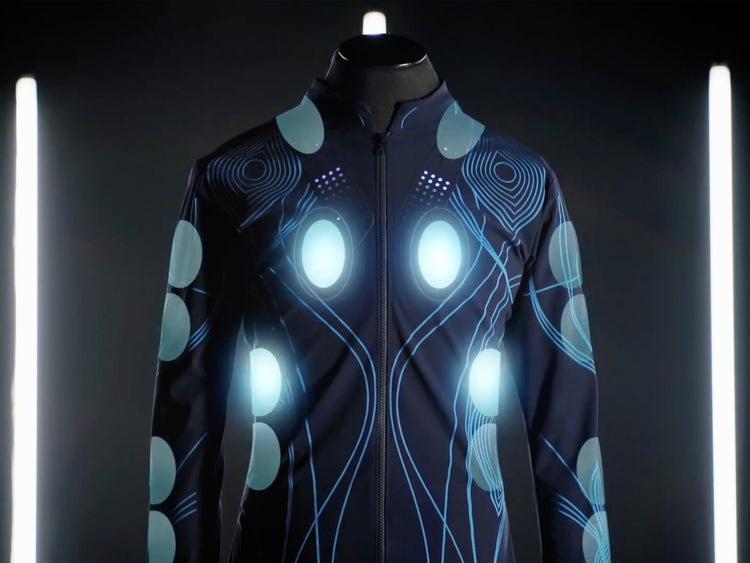
This perspective also informs Rosella’s critique of existing digital platforms. Social media, she argues, often produces a sense of disconnection, presenting curated highlights rather than lived reality. In contrast, CuteCircuit’s work seeks to create shared, embodied experiences. Moments are felt rather than performed.
Perhaps the most ambitious expression of this vision is the idea of a global, synchronized “event.” Rosella imagines a worldwide concert in which participants wear SoundShirts and experience the same performance simultaneously through touch. The concept is both technically complex and conceptually simple: a distributed audience connected not by screens, but by sensation, transforming spectatorship into something collective and visceral, across distance and through shared feeling.
In this conceptualization, wearable technology becomes more than a tool or a trend. It becomes a vast emotional network capable of connecting people across geography in ways that are immediate and embodied.
A wearable vision of the future
CuteCircuit’s work resists easy categorization because it operates across multiple domains at once, combining fashion, engineering, artificial intelligence, and social design. And what emerges isn’t just a vision for the future of clothing, but a broader proposition about how humans might relate to technology when it is worn rather than held.
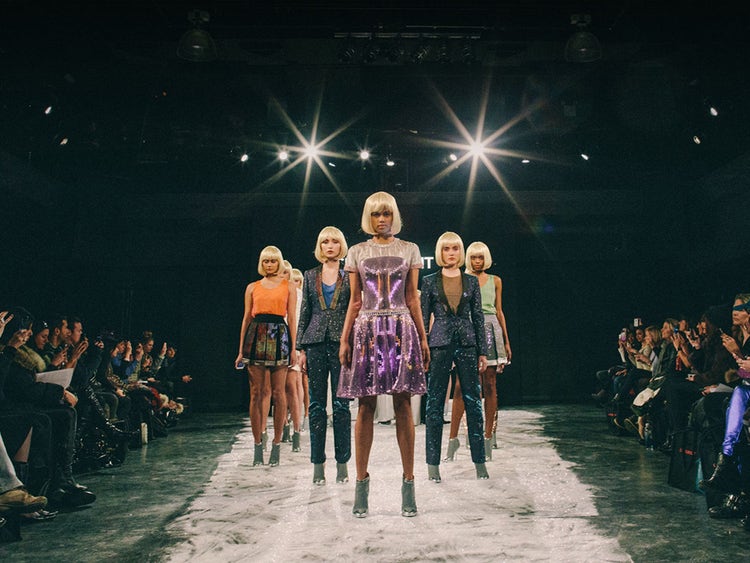
At its core, the studio’s practice suggests a subtle but significant shift. The most advanced garments may not be those that display more data or perform more functions but instead expand our capacity to feel. Often, and most powerfully, together.