The Brooklyn print shop building a global creative community
How Secret Riso Club is keeping the indie spirit of design alive
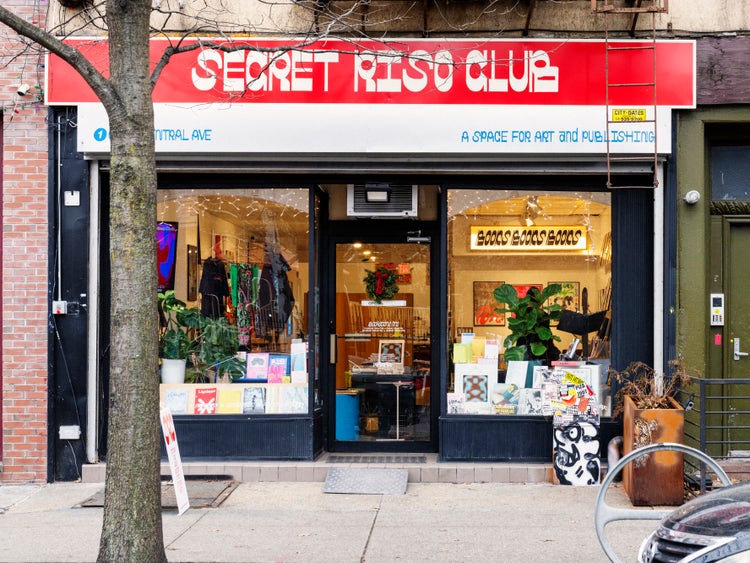
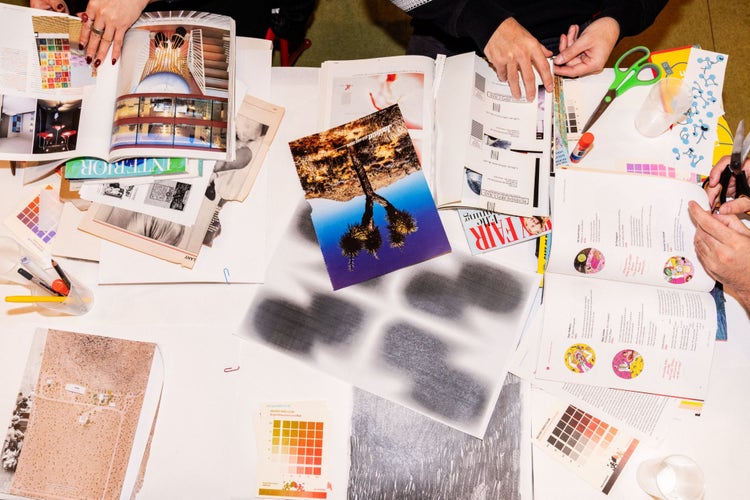
Inside, the space vibrates with the rhythmic churn of risograph printers as neighborhood regulars browse rare artist books, scan the rotating gallery walls, or try their hand at riso printing themselves. Risograph printing—or simply “riso”—is a Japanese stencil-printing process developed by the RISO company that sits somewhere between screen printing and photocopying: Ink is pushed through a stencil wrapped around a rotating drum, layering one color at a time to create inexpensive, mid-sized print runs. The results are often imperfect in the best possible way—vivid colors, slight misalignments, visible textures—and give each print a distinctly handmade feel.
That tactile imperfection has made riso a favorite medium for everyone from churches printing flyers to decades of underground punk scenes making show posters. And in one of the world’s most expensive cities, Secret Riso Club has managed to build a devoted following by preserving that DIY print culture. And through its hybrid studio, classroom, bookstore, and publishing hub, it’s earning fans from Los Angeles to Tokyo in the process.
A secret club for all
What began in 2017 as a single machine in Co-Founder Gonzalo Guerrero’s apartment has since evolved into one of New York’s most distinctive artist-run creative spaces. Originally from Santiago, Chile, Guerrero had been working in advertising design when he discovered risograph through his participation in an exhibition at Brooklyn’s Pioneer Works. Meanwhile, his longtime collaborator, and later Secret Riso Project Co-director, Tara Ridgedell, was a teacher in the New York City public school system, running her own screen-printing project, Practice Print, on the side. Together, they saw the potential of riso printing not just as an artistic medium but also as a tool for education and community building. In a stroke of (dark, ironic) luck, during the pandemic, a rare city-wide rent price drop allowed them to secure a shared studio space–and the club was born.
Motivated by the shrinking number of copy shops left in New York, the pair wanted to create a locale where creators could access printing resources, learn technical skills, and experiment without needing an art school background or expensive equipment. While culture often has its eyes on the sleek or hyper-realistic, the humble risograph is a unique counterpoint—and has experienced a resurgence among creators. “It's a good cross between analog and digital,” explains Ridgedell, noting riso’s lack of gloss as part of its appeal, and the automation that makes it an affordable alternative for screen-printed posters.
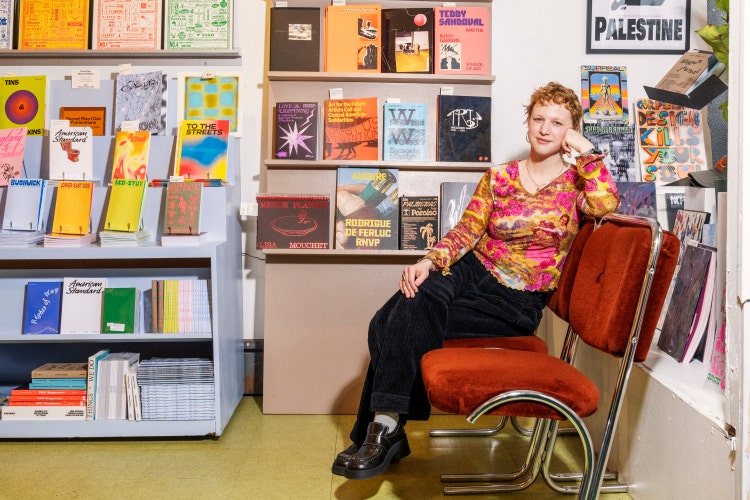
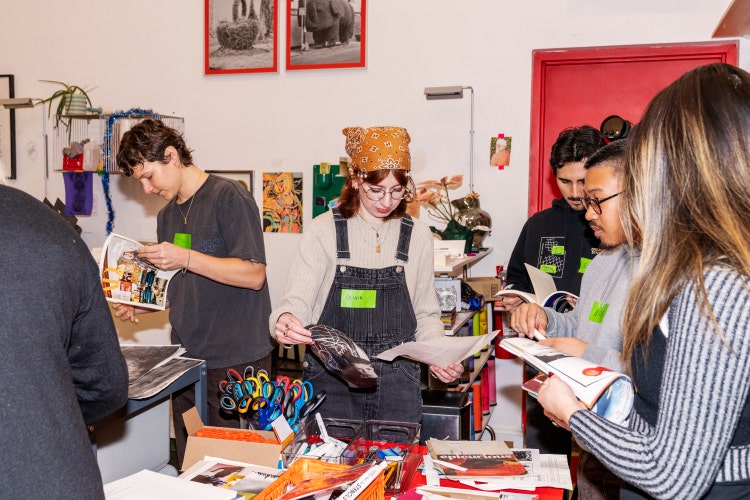
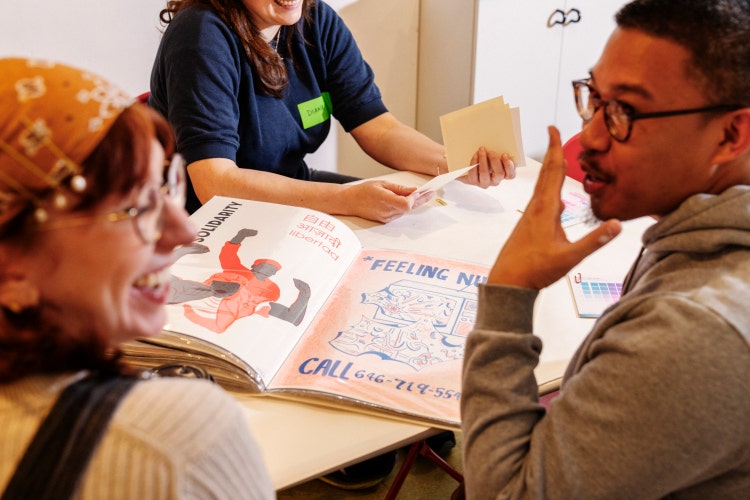
Today, the organization offers workshops ranging from beginner poster-making sessions to advanced courses focused on digital file preparation and machine troubleshooting. A monthly membership program also gives access to equipment and printing time, and an evolving network of collaborators and resources. Here, there’s a mandate that technical knowledge is shared openly rather than gate-kept, an ethos extends beyond the workshop table. The studio also regularly hosts exhibitions, reading rooms, book launches, panels, and collaborations with other independent publishers from around the world.
Local design for the global community
For Guerrero, the group has always resisted easy categorization. “We’re a hybrid, trying different models for what a design studio, publisher, or community space can be,” he explains. While Secret Riso Club takes on commercial printing and design work, its founders remain committed to mission-aligned projects, recently partnering with a local school to lead poster-making workshops and zine classes.
That ethos extends to documenting New York amid rapid gentrification. In the studio’s recent project, “Signs and Artifacts,” Gonzalo photographs storefronts and small businesses across the city, producing books focused on neighborhoods including Ridgewood, Bed-Stuy, and the Lower East Side. Unified by bold primary colors and minimalist typography, the series captures fragments of the city often overlooked by tourists and even long time New Yorkers. The studio plans to expand the project internationally, from Berlin to Mexico City, connecting with design communities across borders.
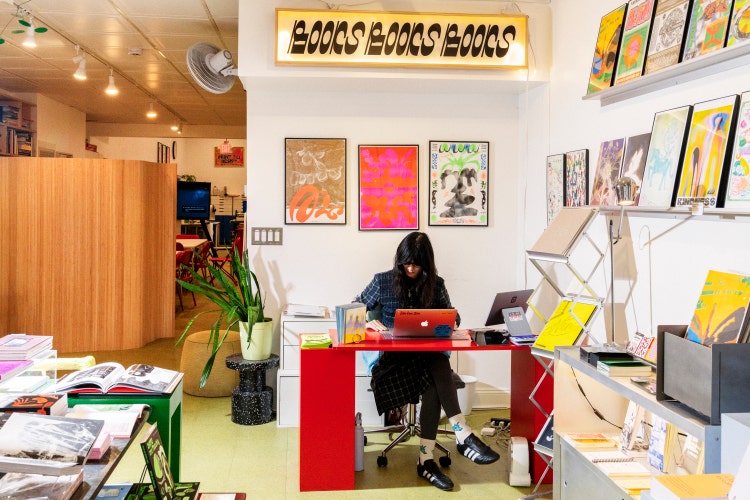
Alongside artist books and posters, Secret Riso Club has also printed voter guides and mutual aid publications, recently collaborating with Soft Power Vote. The founders see print as an alternative form of communication in an increasingly digital world. “You can go to a protest and pass out safety information that’s printed,” Ridgedell says.
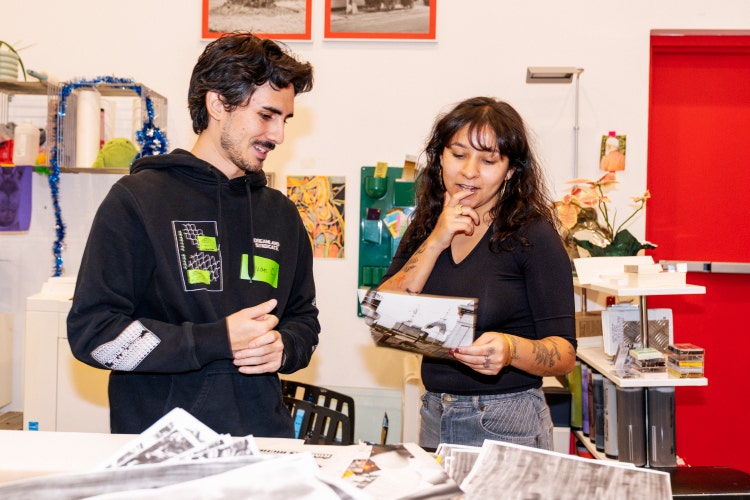
That collaborative environment has also shaped the artists who work there. Sarah Wang, who runs the queer Asian publishing collective Tiger Balm Press, helps manage riso production and client work, while Xena Brar, Co-founder of Battle Jester, facilitates programming. Both describe Secret Riso Club as a place where creative and technical knowledge circulates freely between artists and community members. “We’ve been creating stuff together since we were teenagers,” Brar says. “Our work is experimental and weird, but we also try to offer free or low-cost printing services to people who genuinely need it for their communities.”
Scaling the community space for a global culture
As the organization grows, the founders are taking care to maintain the values that shaped it. Plans are underway to expand programming into the building’s basement, creating more space for workshops, exhibitions, and public events, as well as a member portal for folks to access more resources, such as a resource library. Yet, despite the growth, Secret Riso Club still feels like walking into a still-secret, word-of-mouth community space—the kind that’s becoming increasingly rare not just in NYC but most major metropolises. In an era dominated by speed and sky-high rents, it offers something slower, more tactile. It’s a reminder that even in the digital age, design can still be radically rooted in community.