The old typography is new again
Born of analog typesetting constraints, optical sizing is once again relevant in digital design
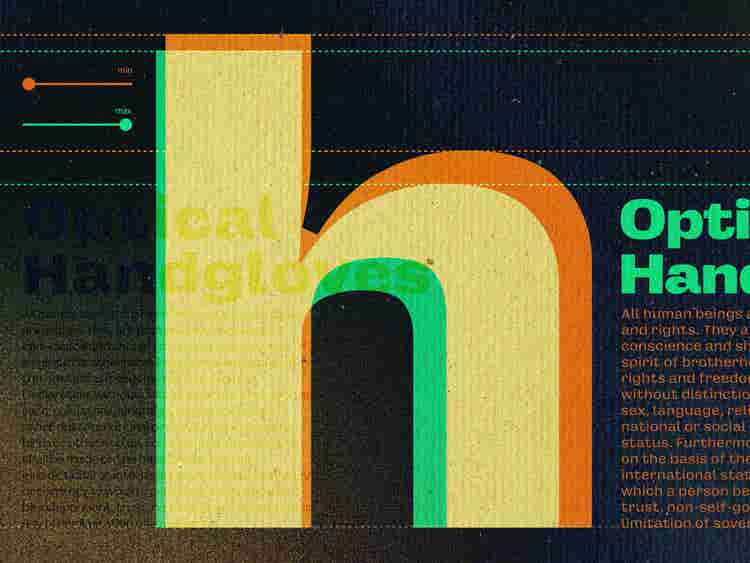
Now imagine holding a small block of metal type in one hand and a large block in the other. The larger type is more expressive, probably with more contrast between its thick and thin strokes. The smaller type is sturdier and simpler, with more consistent stroke widths, larger counters, and a higher x-height to keep it legible.
Those differences weren’t a stylistic flourish, but a physical necessity: At small sizes, ink spreads into counters, hairlines disappear into paper, and closely spaced letters collide. To keep type readable, punchcutters opened counters, thickened their thinnest strokes, widened spacing, and simplified fine detail. At large sizes, where legibility wasn’t at risk, the same letterforms could afford to be delicate, with more contrast and personality as a result.
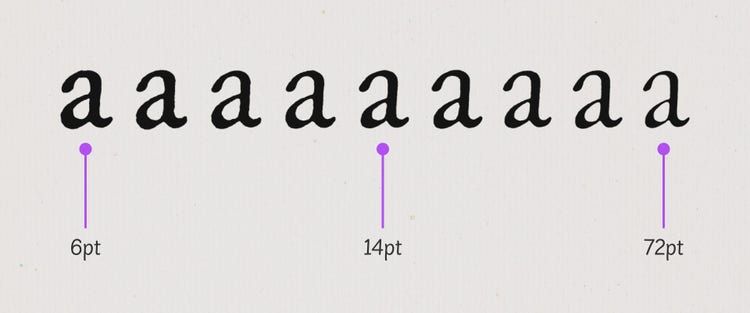
For five centuries, every typeface size was its own unique design. What we now call optical sizing—the practice of adapting a typeface’s design for different sizes to keep it readable—is a modern attempt to preserve that deliberate design choice to honor size-specific type, even though the physical reasons for it no longer apply.
Optical sizing today
With phototypesetting, a single master design could be projected through lenses and film at any size, so it became cheaper to release a single design and scale it than to cut each size separately. Digital typesetting inherited that same logic: Font size became a matter of scaling outlines, rather than selecting a different drawing. A 10-point character and a 100-point character were identical shapes, just rendered at different sizes.
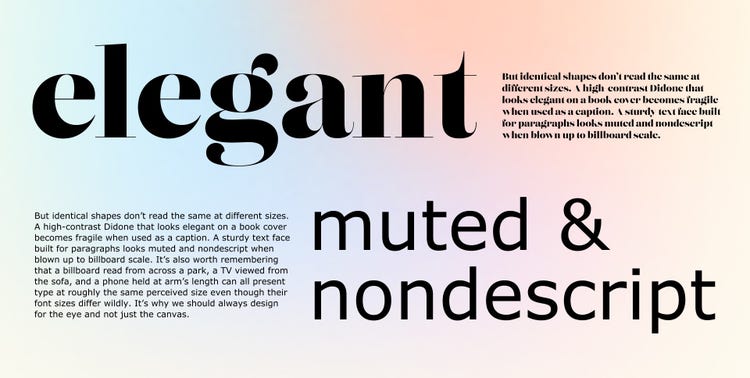
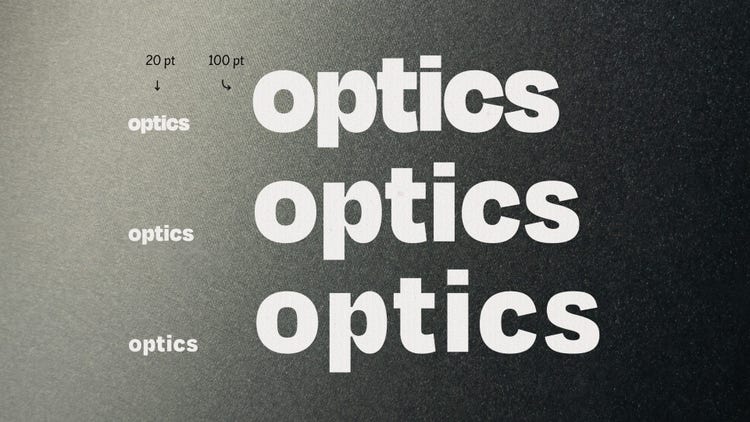
But identical shapes don’t read the same at different sizes. A high-contrast Didone typeface that looks elegant on a book cover becomes fragile when used as a caption. A sturdy text face built for paragraphs looks muted and nondescript when blown up to billboard scale. It’s also worth remembering that a billboard read from across a park, a TV viewed from the sofa, and a phone held at arm’s length can all present type at roughly the same perceived size, even though their font sizes differ wildly. It’s why we should always design for the eye and not just the canvas.
Today, size-specific type design is finding its way back to the mainstream. In Size-specific adjustments to type designs (Just Another Foundry, 2014), Shoko Mugikura and Tim Ahrens document the adjustments that shaped 500+ years of metal type printing and make the case for carrying them into digital practice.
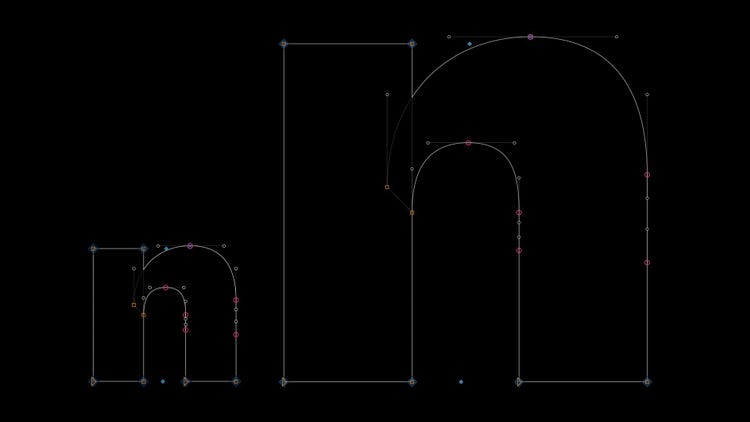
Common optical sizes, from largest to smallest, are display, subhead, text, and caption. The larger sizes earn their personality through finer detail, higher contrast, and tighter spacing; the smaller ones earn their legibility through sturdier stems, more open counters, looser spacing, and a higher x-height. If you’ve ever picked a font with “Display” in its name (like Playfair Display), you’ve already encountered this concept.
Optical sizing with variable fonts
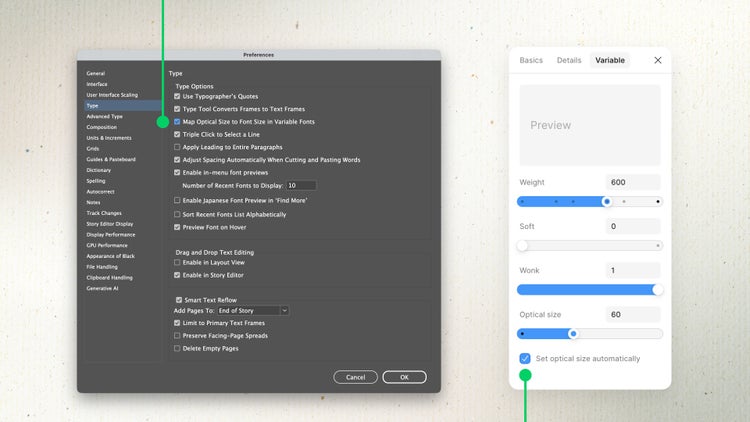
Those named sizes are distinct designs, but a variable font with an optical size axis (opsz) offers something subtly different: a continuous slider between them, so the design can change gradually as size changes, rather than jumping between fixed steps. Unless turned off in the app’s preferences, Adobe InDesign automatically maps font size to the matching optical size value (60-point maps to 60 on the axis). Figma does the same, with a checkbox for automatic mapping.
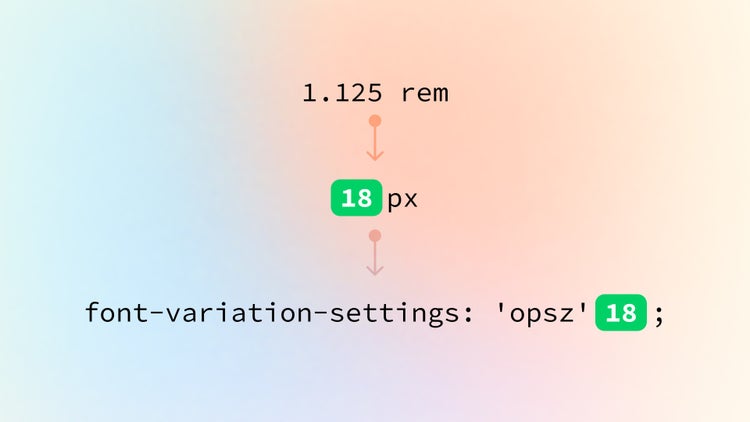
Most web browsers behave this way, too: A font-size of 60 pixels translates to opsz: 60 without us needing to do anything. Relative units like rem first get translated to their pixel equivalent, then mapped to the opsz axis.
But while it’s easy to let the software do the hard work, it’s also possible to take the wheel when you want a little more control. On my own site, where I use the variable version of OH no Type Co.'s Degular, I turn the automatic mapping off and set optical size deliberately at different viewport widths. In other words, I’m telling the browser that once the screen is wide enough, I want a specific optical size value—not the font size the automatic calculation would’ve provided.
@media screen and (min-width: 40rem) {
font-variation-settings: "opsz" 24;
}
How precise you need to be with this control depends on what you’re designing, but using variable fonts lets you transition smoothly through different optical sizes. Rather than rely on the more traditional delineations of display, body, etc., you can let the design respond to context.
Several variable fonts in the Adobe Fonts library have an opsz axis, including Degular, Adobe Aldine, Antonia, Corsario, Gimlet Sans, Sherborne, Sole Serif, and Zeitung Pro.
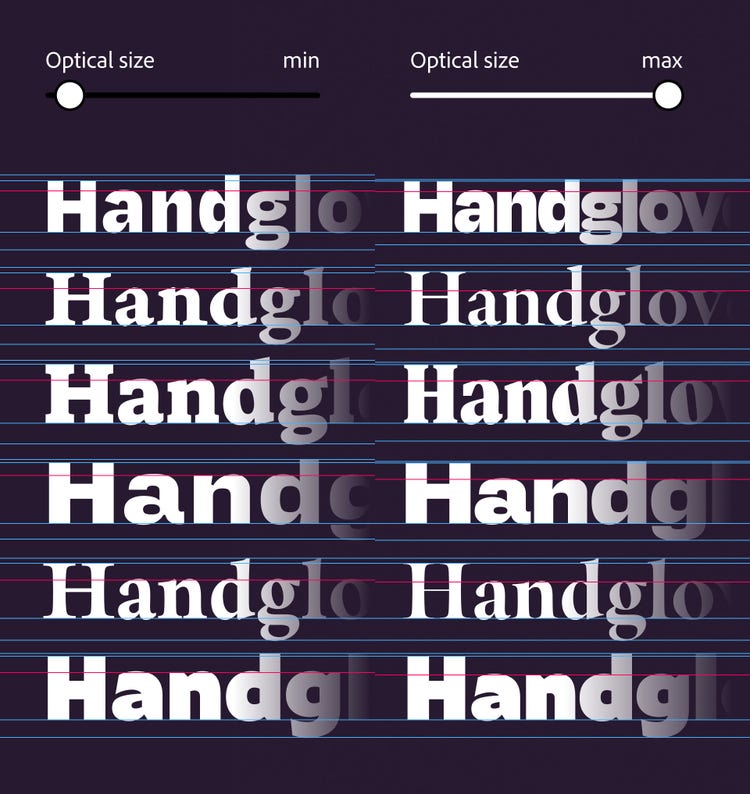
Whether you leave optical sizing to automatic mapping or set it by hand, type feels appropriate to its context: more readable in long prose and more expressive at scale. Understanding this technique can change how we treat our type, even when a selected font doesn’t offer a variable optical size axis.
Good typography rarely announces itself, and optical sizing is a practice where a craft older than the printing press meets the most modern tooling we have. The method that serves the message best is the one worth reaching for.