The minds (and hands) making music tech more human
The future of sound lies in touch, play, and life-scale innovation
For those uninitiated, MIDI (musical instrument digital interface) outputs send the expressive language of a performance as digital data to instruments and software, acting as a kind of nervous system for the whole musical experience—fitting for a night that was all about community.
“Our sonic explorations made us feel human again,” Fierra said. “It was like we were in a sandbox and kids again. When we were messing around with this thing, we realized, ‘We need to bottle this and share it.’” Despite the machine’s reliance on waves, signals, and its digital nature, there was something undeniably analogue about the experience—an organic, tactile quality to the sounds and movements that defied the high-tech underpinnings of the instrument itself. It felt techno-optimistic.
It can be easy for artists to feel despondent about the state of music-tech these days, what with streaming payouts averaging barely $0.003 per stream, government recruitment ads running between songs, and generatively created bands that can sound eerily alike. Being a working musician is harder (and scarier) than ever before. But there have also been positive developments in creative tools for artists.
New tools and synthesizers, and the creators behind them, are a major piece of that conversation. One example is Artiphon, which has had success with Chorda, an instrument that resembles the neck of a guitar, but acts like a playable looping device. Another is Blipbox myTRAX, a machine that acts as a synth, but can be played by kids as young as three. And, of course, the Demon Box, a powerful tool that can be used as an instrument for both sound and video manipulation—simply touching a signal-emitting object (like your phone) to the Demon Box creates disruptions that the machine then processes as chaotic audio or visual outputs.
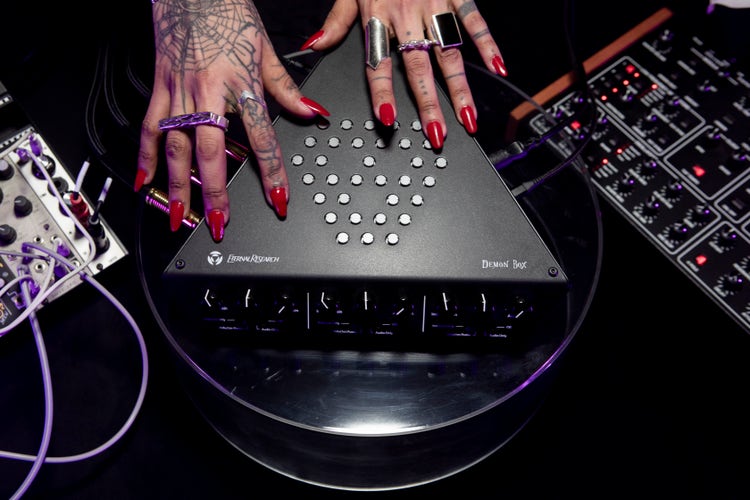
Adam McHeffey, chief creative officer at Rock Paper Scissors, a PR and marketing company for emerging music tech companies like Demon Box’s parent company, Eternal Research, sees these innovations in tactile instruments as a sign that musicians and producers are actively yearning for something beyond the black mirror of our phones and computers, while still keeping things fresh with new musical options. “People don’t want to be typing and [making music] on your screen,” McHeffey says. “You have access to every sound in the world now through software. How will people want to play those? How will people want to express themselves through touch?”
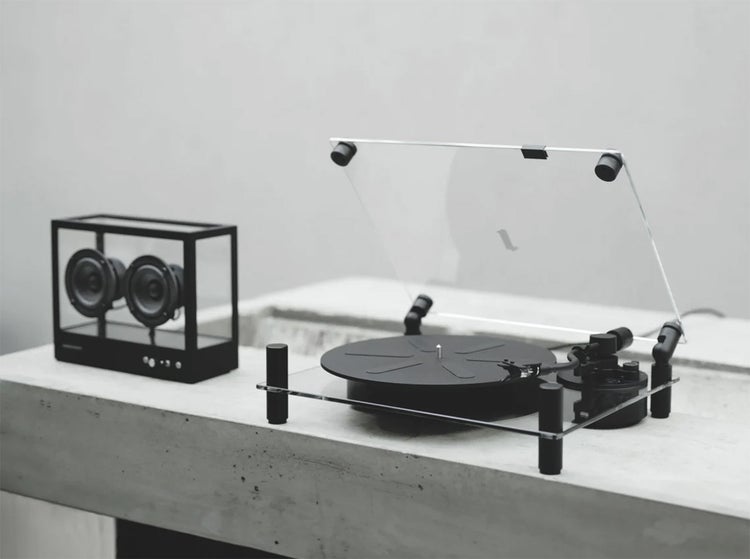
Innovation in music technology isn’t confined to how music is made; it’s also reshaping how it’s experienced. Playback devices like Stockholm-based Transparent's speakers and turntables reframe listening as an intentional act rather than background noise. With their see-through, modular, and repairable designs, Transparent’s products feel almost retro-futuristic, a deliberate slowdown in an era of sealed black boxes doomed to planned obsolescence. But that throwback is itself the innovation: By stripping away opaque interfaces and minimizing digital distraction, these devices encourage listeners to put other tech aside and reconnect with music as a ritual—something to be fully present for, rather than an ambience that disappears into a multitasking scroll.
“Music is not just something [people] put on quickly and forget about,” says Per Brickstad, creative director of Transparent, who consulted with top musicians and artists on how they saw their ideal playback device. “[Audiences] want to say, ‘Wait a minute, I'm going to take some time and do a little ritual here. I want to spend some real time to be present in this moment with this artist I appreciate. That I have this physical manifestation of this creativity in the shape of a record.”
And there are also innovations in distribution. Resonate, a streaming service that popped up about four years ago (and is currently pausing new member signups to update the platform), describes itself as a co-operative that offers both artists and listeners more control. Even further outside traditional venues is the OneClock, a time-keeping company founded by artist Jamie Kripke, that produces an alarm clock that wakens listeners to a randomized original song by Grammy-winning composer Jon Natchez from the band the War on Drugs or Los Angeles producer Captain Planet. Kripke says there are more artist collaborations in the works.
OneClock brings to mind the idea of creating functional music and sound marks (the marketing industry term for sound trademarks like the Intel chime, the Netflix “ta-dum,” or the Nokia ringtone). And it makes one wonder what other spaces musicians might be needed—a song when your toast is done, or maybe a unique piece for each train stop so riders have an easy reminder of where they are—James Murphy from LCD Soundsystem once proposed this as a concept to The Wall Street Journal.
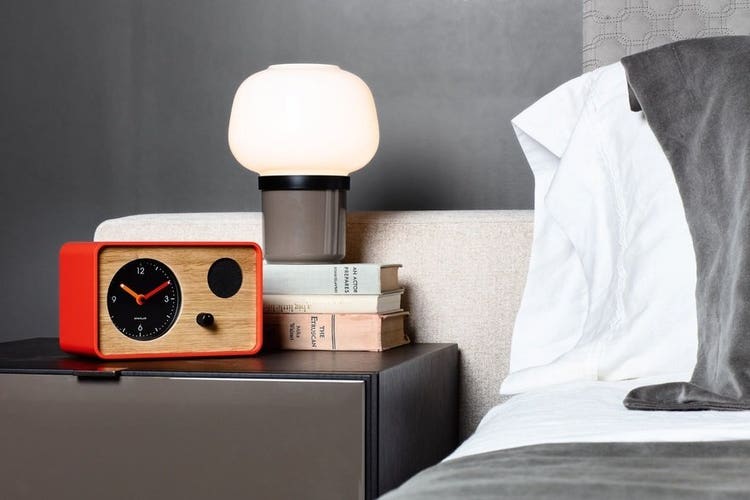
“Musicians have had to adapt and figure out what's next, because streaming killed album sales,” says Kripke. “One of the early examples of this is Brian Eno, who created the startup sound you hear when you open Windows 95. I mean, that's music too, right? But it's tapping into where it's crossing over into different parts of our lives. When you get into some cars, they'll welcome you with a little song.”
Arthur Ashin, an acclaimed artist and musician based in New York who goes by the moniker Autre Ne Veut, says it’s important to remember that new technologies often also mean new creation tools at the artists’ disposal. They point to Aphex Twin’s use of scratched-up CDs and Autechre’s use of then-powerful processing speeds to create what was at the time innovative music, but music that nonetheless stands the test of time.
“One of the downsides and upsides of the moment is that we have just infinite access to simulations of everything,” Ashin says. “Plugins [code used in music production programs that emulate analogue production tools or create novel sounds] are amazing now. They simulate old real things, and they do brand new things that are cool. I find it exciting to toy around with things I don't know about. I think it's important to remain naive, and new technology is constantly producing new opportunities to create from a naive place.”
From here, McHeffey says, it’s up to the audience to find it.
“Fandom continues to come up [in the music innovation space],” he says. “There are a lot of innovations, apps, and tools being developed now that are trying to be a one-stop shop where artists can grow closer to their communities. They have their own social media networks, their own tour calendars, and their own [media] players as well. The majority of those companies are just starting to grow. The challenge is, can we hit critical mass? But artists seem to love it, there seem to be enough fans to make it worthwhile to post, and artists are making money.”
The tried-and-true method? Experiencing new things in person. Back at 2220 Arts and Archives, Alexandra Fierra and Brynn Nieboer are showing off the Demon Box’s potential by screening two short, experimental films that used the instrument in their soundtracks, and dance performances backed by a band featuring Fierra on the Demon Box. The real innovation, it seems, is rejection of the phone, the recording, and the digital space in favor of the experience—an intimacy that brings musician and listener closer and cannot yet be recreated through technology.
“[The live experience is something] we cannot yet transmit over the internet,” says Ashin. “There's a reason why people are returning to the experience.”