The return of 99U: Creativity in the age of abundance
In a new era of generative tools, a deeper focus on what makes work matter
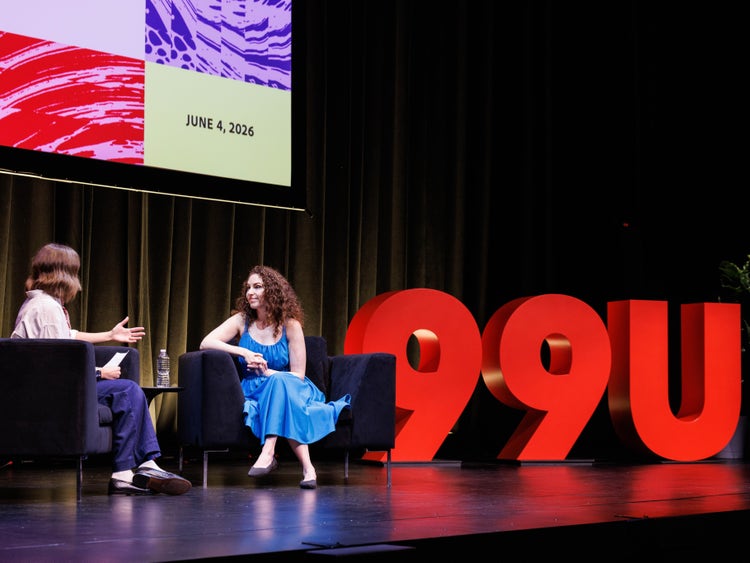
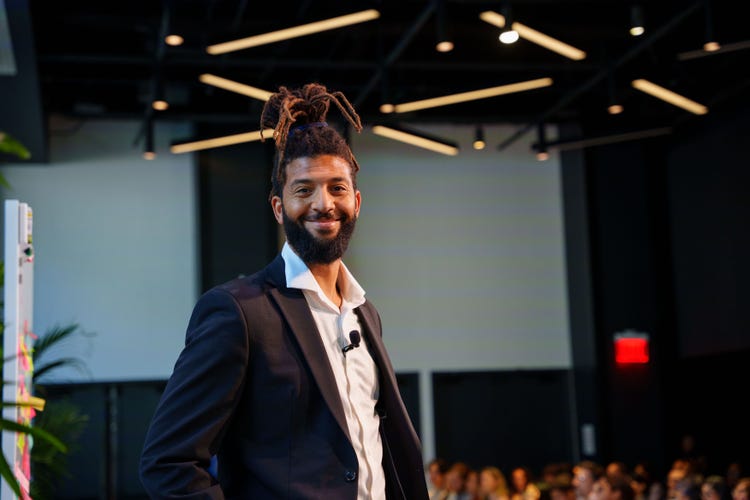
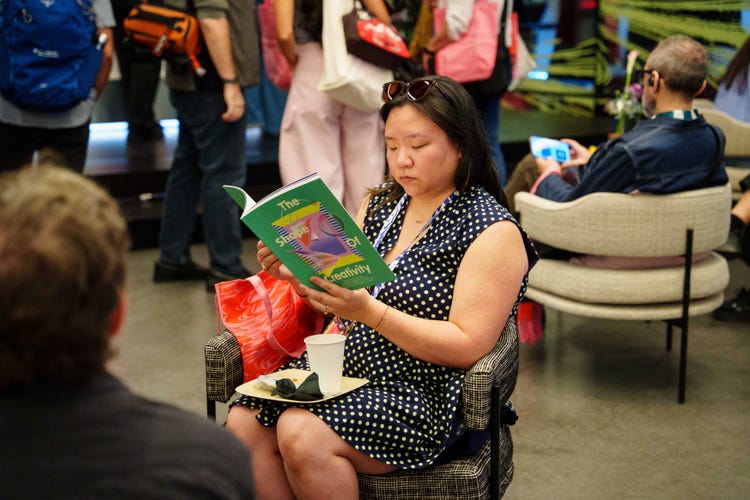
Across a full day of talks and conversations, featuring speakers and panelists including artist and MacArthur Genius Trevor Paglan, Eyebeam Executive Director Julia Kaganskiy, Cooper Hewitt Award winner Nu Goteh, Director and Video Creator Karen X Cheng, Creative Technologist Don Allen Stevenson III, and many others, the program moved fluidly between keynote reflections, design provocations, and hands-on explorations of emerging creative tools. From the opening keynote with Adobe SVP of Design Eric Snowden, with panels spanning from design and storytelling to new modes of making, the stage became a shared space for examining how creative practice is evolving in real time.
Across sessions, many of which can now be viewed on YouTube a shared thread emerged that creativity is not being replaced, just reweighted. As tools make execution faster and more accessible, value is shifting toward the parts of the process that feel most dynamic and alive. Judgment, intention, lived perspective–the new premium is on taste. At the same time, systems expanding creative possibilities are also reshaping the conditions that shape originality itself.
What emerged over the course of the day wasn’t uncertainty so much as energy—an active, messy, and optimistic attempt to define what creativity looks like next.
AI and the creative middle ground
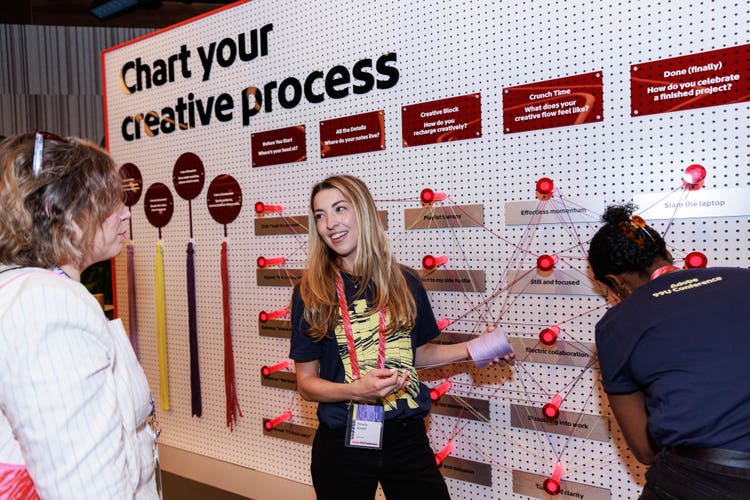
If there was one defining signal from both the stage and the round tables, it was that creatives are not reacting to AI in a single way. Instead, they’re actively experimenting and recalibrating in real time.
And Adobe’s 2026 study of nearly 2,000 creatives across the US, UK, and Japan reflect that complexity. Overall, 86% of creatives say AI has been positive for their work, and 38% use it daily. Yet the largest segment, 41%, sits in what the research calls a “Pragmatic Middle.” Meaning, they’re open, curious, but still figuring it out. At the same time, 84% report optimism about their careers, while only 50% feel excited about AI itself. Notably, creatives aged 18–24 are the least excited cohort, challenging assumptions that familiarity automatically leads to enthusiasm.
All this points to a field in motion. Creatives are not choosing sides. Instead, they’re actively learning the shape of a new toolset while still defining its role in their work. Eric Snowden captured the tension, defining that “most creative people feel like AI is helping them make better work. At the same time, it feels like it is threatening their livelihoods.” It’s not a resolution, but coexistence. And in that space, real experimentation is happening.
The return of friction (and the joy inside it)
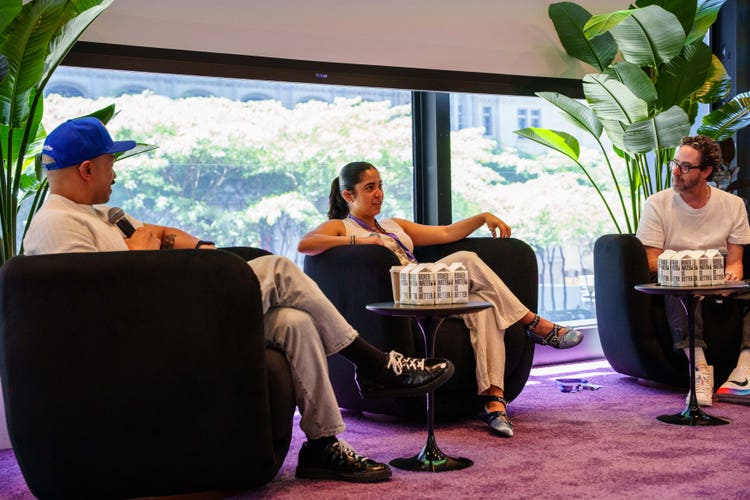
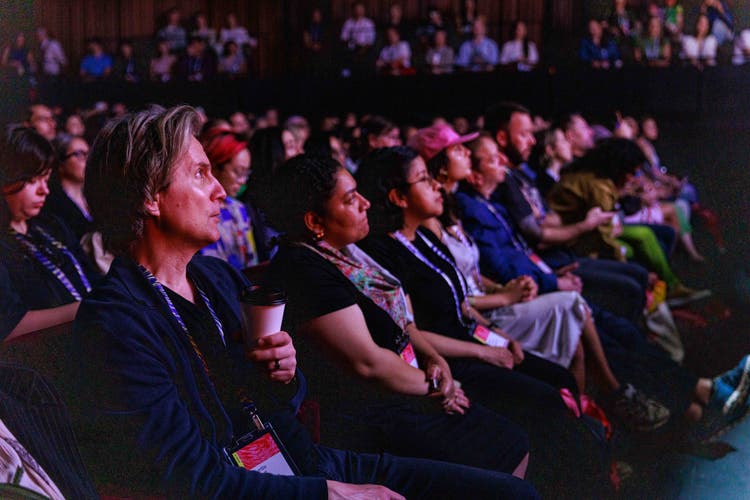
One of the most surprising undercurrents of 99U was how often “friction” came up. Not as something to eliminate, but to protect. “My design process was very much analog,” noted Parsons student Kiara Cheng in her discussion with Creative Director Rich Tu and Adobe’s Senior Director of Design Shawn Cheris. “And because of its nature, I was able to make a lot of mistakes. And those mistakes were the ones that pivoted me to the directions that my projects came out to be. I fear it might also be closing those mistakes that were the ones necessary to take me to the next level.”
That idea resonated with the room, with Cheris adding, “We’ll all have to find the new friction points, where the happy mistakes come out.” A reminder that creativity doesn’t just appear from speed or precision, but often from unexpected detours and wrong turns.
That same theme took on a sharper edge in the panel with renowned graphic designer Stefan Sagmeister and photographer Tim Tadder, moderated by Resh Sidhu, VP of Creative at Adobe, where differing perspectives on AI still converged on one point: Quality is still rare, and taste is decisive. Sagmeister noted, “The percentage of good work has always been tiny,” arguing that the distribution of quality has not fundamentally changed with new tools. Tadder countered from a production-driven reality that “for every thousand pieces of AI work that you see, maybe one of them is good. Good is more elusive, but that doesn't mean that everything AI is bad.” He added, “Quality comes from the person entering the information.”
Across conversations, there was a shared idea that creativity can’t be summoned by speed or volume, but from the ability to shape meaning amid abundance and digital churn.
Human creativity as the new advantage
As tools make execution easier, something else becomes clear: Creativity is human. As Snowden noted, our innate talents are the “new currency that’s going to be the thing that helps people stand out and cut through the noise and the sameness.”
Photographer Lindsay Adler framed it less as resisting change and more as consciously defining your role within it: Creative careers “aren’t being erased; they’re being reshaped.” The work now is to meet that shift with clarity and adaptability and grounding it in voice and perspective.
In that context, even the choice of whether or how to use AI becomes part of creative authorship: “Whether you use AI or you, specifically for your brand and your career, choose not to, it should be purposeful, it shouldn't be just something that happens to you.” What matters is less about the tool itself and more the intention behind its use.
She extended that idea into the broader question of visibility and identity, arguing that “branding, and understanding your personal voice and message and making sure people understand that, is probably more important than ever.” And in a field where production is becoming increasingly automated, she pointed to a rising baseline: “As more tools are in more hands, it pushes us to be better as the bar is raised. If you want to be a photographer and AI can compete with you, you better raise the bar to compete.”
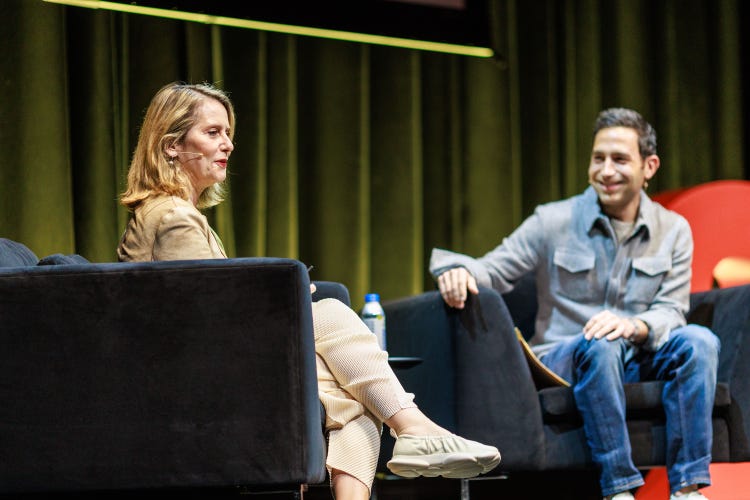
Behance Founder Scott Belsky pushed the idea further—“Let’s get excited about what makes humans more important”—during his fireside chat with MoMA's Senior Curator, Department of Architecture and Design, and Director, Research and Development, Paola Antonelli, who grounded it in practice, urged creatives to “get your hands dirty” and to keep building a point of view about the world through lived experience and study.
That thread carried into the session with Adobe Senior Principal Designer Brooke Hopper and Right AI Founder/Owner Ovetta Sampson, who called for a renewed sense of creative responsibility in the age of AI. Hopper reflected on designing technology to “amplify the beauty of humanity and not exploit its fragility,” while Sampson described generative systems as reflecting “the median of the basement,” arguing that human craft is what lifts output toward the “ceiling.” Together, they emphasized that creatives are active agents in shaping how tools are used, and ultimately what they become.
Thinking, doing, and the space between
As generative tools compress the distance between idea and execution, a subtle tension surfaced: “How do we protect space for thinking when doing becomes so fast?”
Creative Builder/ Technologist Bilawal Sidhu in his discussion “Blurring the lines between content and code” described AI as an amplification layer—“like an Iron Man suit”—while noting, “The doing is overtaking the thinking.” Author Dave Birss made a similar observation while discussing the hacks and pitfalls of modern digital efficiency: “Technology can tempt us into thinking we can get straight to doing.”
Rather than a warning, this felt more like an invitation to slow the moment between idea and output just enough to let intention catch up.
Story as connection, not just content
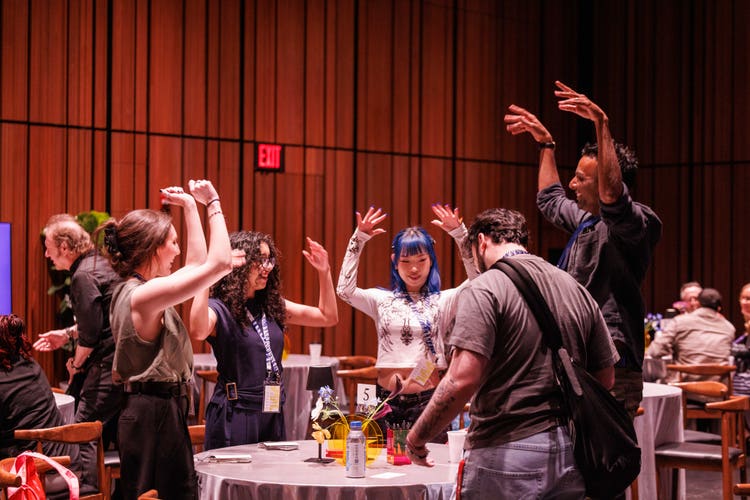
In a world where making things is easier than ever, storytelling stood out as something that still feels deeply human and matters enormously. Director and Content Creator BrandonB shared it simply, saying, “Stories have this strange control over us—they can even make a room full of strangers erupt in triumph together.”
As creative tools become more egalitarian, the story becomes less about filling space and more about creating connection, helping people feel something together in a world that often feels fragmented.
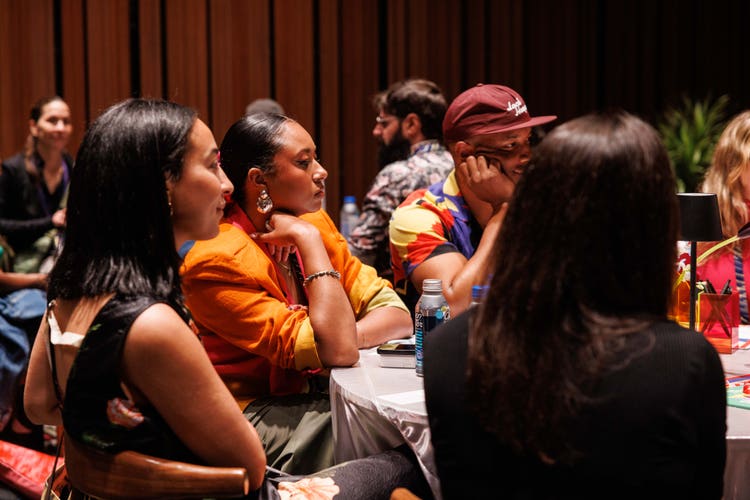
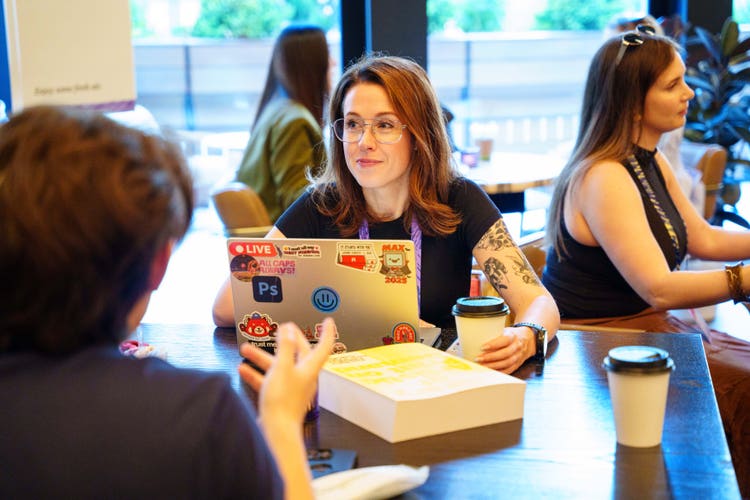
If AI and automation defined the technological backdrop of 99U, community defined its emotional core. Creative Mornings Founder Tina Roth Eisenberg captured it clearly: “Creativity and community are not nice to haves; they are the infrastructure that makes meaningful change possible.” Throughout the day, there was a shared sense that creativity doesn’t happen in isolation. That it’s shaped, stretched, and sustained by people building alongside one another.
A creative shift, not a creative crisis
Across 99U 2026, a clear pattern emerged, not as a warning, but as a direction.
As creation becomes easier, creativity moves upstream. Execution becomes more accessible. Judgment and taste become invaluable. Friction is rediscovered as essential to originality, and community becomes infrastructure, not accessory. And, perhaps, AI becomes not a replacement for creativity, but a catalyst that forces it to evolve.
Because overall, we are not running out of creativity—we are being asked to practice it differently. In an era of digital noise, the challenge isn’t just how to make things faster. It’s how to make them more human. And in the process, better.